Showing posts with label Active Panda. Show all posts

Thursday, April 28, 2016

Foodie Excursion: Chocolate Factory Open Day @ Kāko Chocolate

The Sweetest Little Chocolate Shop, which used to be in the Mid City complex in the middle of Auckland city, was my go-to place for buying a box of gift chocolates. Founder Stu Jordan started making his own creations under the Kāko brand, and it turns out the chocolatier knows how to run a business too. When I heard about Kāko's chocolate factory open day last Saturday, I decided to take a look and learn a thing or two.

Queue outside the chocolate factory, shortly before 10am.

Fortunately, I turned up shortly before 10am, as there was already a queue before the opening time. Although it was no Willy Wonka factory, the Glen Innes warehouse was visited by 1300 guests, and they only had capacity for 500. Stu took the massive crowd in his stride, maintaining his good humour and making a waiting list for the tours and demos. To look after as many of us as possible, he doubled the size of the groups to 40, and continuously ran sessions rather than just on the hour and half-hour as advertised.

Shopping

While waiting, we had the opportunity to look around the shop area, which had discounted chocolates ($1.50 instead of $2.50 for individual pieces, for instance), truffle making kits, ingredients such as glucose, invert sugar and couverture, and various useful equipment like moulds, scrapers and colour powders.

Part of the chocolate selection on display at the front counter.
Chocolate making ingredients and equipment for sale.

Chocolate Tasting

We also got to sample two different chocolate flavours, at least one of which must have included alcohol as children were not allowed to participate. By writing down your feedback (what flavours do you taste, what was good/bad?), you also went into a draw for a prize, as well as the possibility of being invited back as an official chocolate taster.

Chocolate tasting station - people were really thinking hard about what they were tasting!

Factory Tour

When it was finally time for us to do the factory tour, we were taken to a temperature controlled area at the back, which was basically a commercial kitchen. The first thing Stu pointed out was not really part of the chocolate making process, but crucial to making lives easier for the staff: the dishwasher, which could clean and dry their chocolate moulds in 3 minutes.

He then talked us through the quality of their ingredients, including using real fruit for their fruity chocolates. He seemed particularly proud of their white chocolate, which had a much higher percentage of cocoa butter than the stuff you get at the supermarket, and he broke some leftover Easter eggs apart for us to have a taste, along with some other chocolate samples.

White chocolate shells, ready for filling.

I was surprised to learn that a lot of things were done by hand. One person had the job of polishing the moulds with a bit of cotton, and that was the only task they had. Another worker specialised in filling the chocolate shells with their flavoured centres. I forget how many chocolates they make each day, but it was something like in the high thousands. I would be bored after 10 minutes!

The most interesting part for me was seeing their custom machine for spraying the moulds with colour. I had always wondered how they made the chocolates look so pretty, and now I knew! Unfortunately, we didn't get to see it in action.

Colour sprayer in the corner.

After putting the splashes of colour on the mould, you were ready to make the chocolate shells. A machine with multiple streams of molten chocolate made it easy to fill all the holes in a mould at the same time. Tip out the excess chocolate, let the thin layer touching the mould set a little, run a scraper over the top, and you were pretty much done! (For best results, Stu left the moulds on their sides for the chocolate to finish setting.)

Kind of like a chocolate fountain.

There were a couple of other machines of interest. One was used for roasting nuts, used to make their peanut butter from scratch, for instance. The other made it easy to cut strips of toffee. These devices made it seem a little more like a factory, rather than just a large kitchen.

Chocolate Making Demo

The chocolate making demo took place in the same room. Stu showed us how to make truffles, pretty much the exact same thing you would be doing if you purchased one of Kāko's kits. It turns out that the filling is just chocolate ganache, made from an emulsion of cream and chocolate. For their commercial truffles, they also add some glucose to the mixture, which naturally extends the shelflife by two weeks.

Filling a piping bag with the cooled chocolate ganache.

A common mistake that people make is heating the cream and chocolate directly in a saucepan. Apparently chocolate burns at 60°C, which is why many recipes tell you to set up a double boiler. While we waited for the ganache to cool, Stu told us about the chocolate making courses his company offers, and gave us discount vouchers to attend one of the classes.

We then watched as he filled a piping bag, skilfully squeezed the ganache into each pre-prepared chocolate shell, and demonstrated sprinkling some toppings on top, which could be chopped nuts or whatever you fancied. We didn't have time to wait for the filling to set. I bit into mine straight away, and it was dark, rich and delicious.

Chocolate truffle, still warm in the middle.

Kāko's excellent chocolates make it easy to support a local producer. I am glad the company has branched out into offering classes and kits too. And what a great idea to open up their factory for a day—sure, they had to stop production and give out plenty of free chocolate, but I'm sure they've made a lot more people excited about the stuff!

Friday, November 21, 2014

Foodie Excursion: Wintergardens, Auckland Domain

One of my favourite spots around town is the Wintergarden complex in the Auckland Domain. The greenhouses look amazing, both inside and out, and they are full of beautiful plants that you don't often get to see.

Colourful flowers at the Wintergarden.

When we visited last weekend though, I was surprised to notice some food-related plants that I didn't remember seeing before.

Torch ginger, also known as ginger flower or bunga kantan, is used in South East Asian dishes such as Penang asam laksa, as well as eaten in a fruit salad in Thailand.

Torch ginger.

Sago palm is used to produce the translucent pearls which make me think of puddings and soupy desserts, but the starch is apparently also used to make noodles and white bread in some places.

Sago palm.

Coconut palm is the plant that gives us coconuts. You may remember my experience making my own coconut milk last year.

Coconut palm.

Coffee lovers might be interested to see Coffea arabica, though it looked mostly like a jumble of leaves.

Arabian coffee.
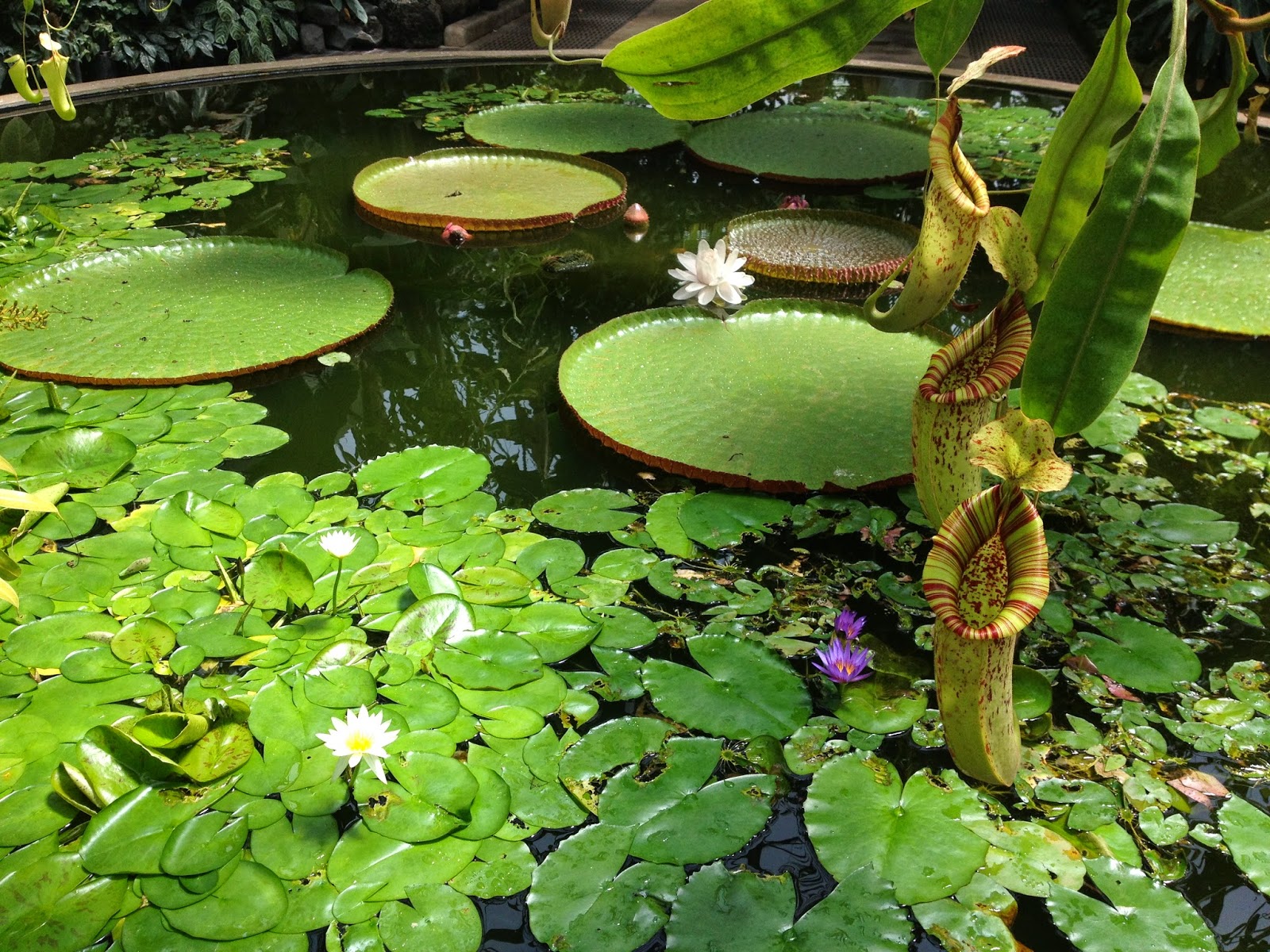
Then there were things that reminded me of food, like the water lilies that made me think of lotus flowers.

Lilies in a pond, and more.

These crazy-looking fruit are buddha's hand citron, or fingered citron, which are basically ornamental citrus fruit.

Buddha's hand citron.

We also saw a bird's nest with an immobile bird in it, which we initially was a fake animal, and, of course, plenty of flowers of different shapes and sizes.

There is construction going on around the Wintergardens right now, but the place is still open to the public and so worth a visit!

Outside of the Wintergarden.

Sunday, October 19, 2014

Foodie Excursion: Howick Historical Village

New Zealand is a relatively young country, but it's been around long enough for plenty of changes to have taken place. Since we missed the Auckland Heritage Festival recently, we indulged our sudden interest in local history by making a trip out to the Howick Historical Village, to see how things were in the 1800s.

The village is a "living history museum" consisting of original colonial buildings as well as replica structures, designed to let visitors experience life in a fencible settlement. Communities like this were made up of retired British soldiers and their families, who arrived between 1847-1854 to protect Auckland from possible attack. They settled not only in Howick, but also in Panmure, Otahuhu, and Onehunga.

Although the focus of the museum is not particularly on food, there are still plenty of food-related points of interest, as you can see below.

Old Kitchens and Dining Rooms

The buildings range from large homesteads to little cottages (to a replica tent), and you can see what the kitchen and dinings areas were like in some of them. They may be lit by electric lights rather than candles these days, but the items in the rooms still paint a fascinating picture of of the past.

Kitchen gadgets.
Special objects in a kitchen included (not all pictured)
  • an egg rack - this looked like a wooden board with round holes
  • a knife cleaner - iron knives were used before stainless steel ones were available
  • a honey press - the leftover wax was used to make candles
  • tin mugs and plates - common in 1860, though slowly replaced by enamel ones from 1840

Dining room.
Both the kitchens and the dining rooms had a fireplace, which I imagined the families would huddle around for warmth.

Herb Garden

Lavender is a pretty common plant, and I have heard of lemon balm, chamomile, comfrey, and caraway before, even though I may not know what they look like. The herb garden by one of the cottages had some more exotic specimens as well though:
  • angelica
  • borage
  • clary sage
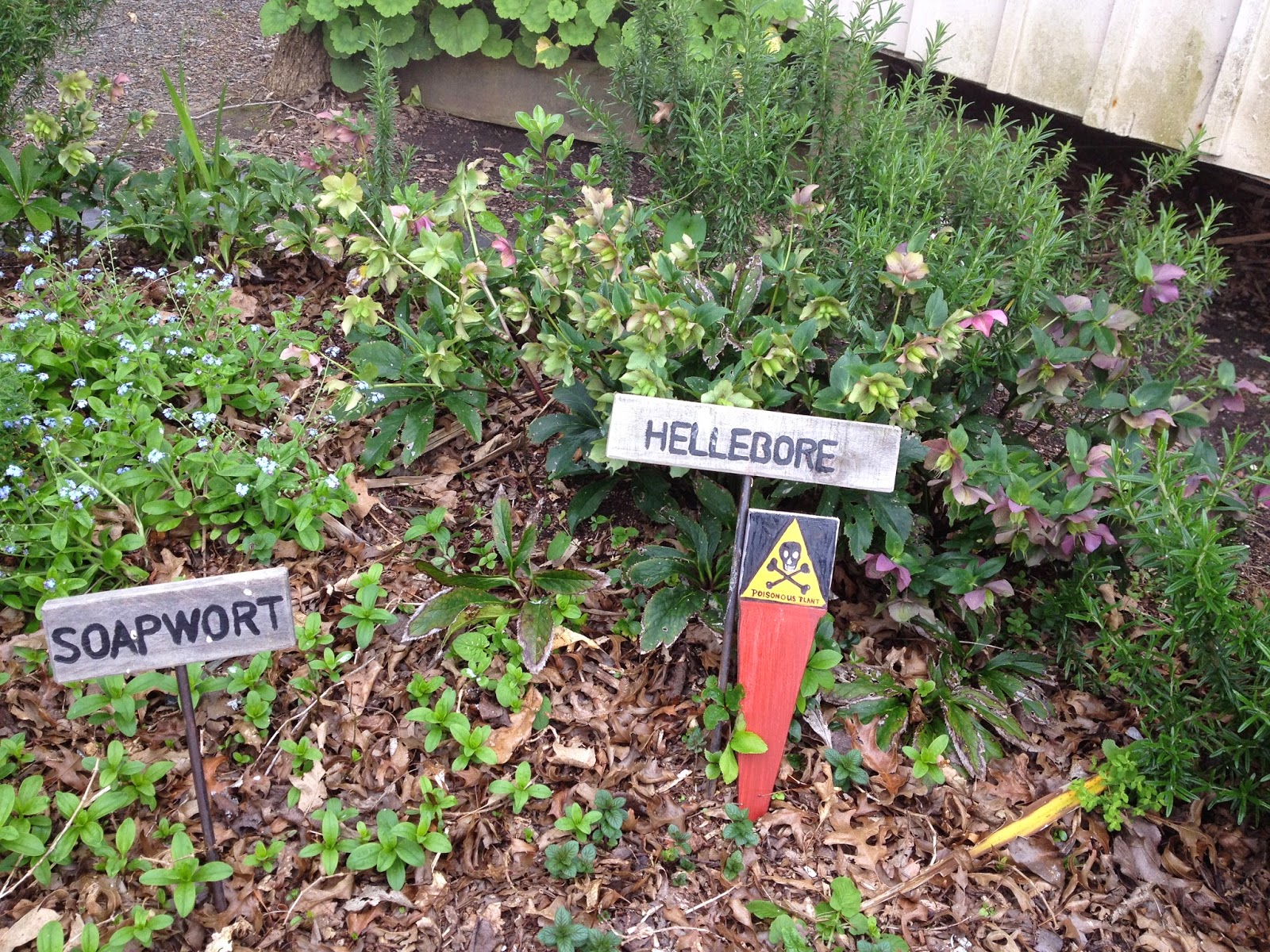
  • hellebore
  • foxglove
  • soapwort
  • tansey
  • winter savory
  • wormwood
  • yarrow

Small part of herb garden.
In another garden area, we saw tobacco and broccoli being grown, not to mention sugar cane and pomelo.

Making Flour

The museum had an exhibit on the production of flour inside John Bycroft's flour mill, which included scythes, hand operated wheat mills, a chaff cutter and peck and bushel measures, along with plenty of information. We learnt that
  • wheat was introduced to New Zealand by Captain Cook in 1773
  • John Bycroft had a wind driven flourmill in Epsom, until about 1854 when he moved with his brother Joseph to the windmill near Manukau Harbour in Princes Street, Onehunga
  • Howick and Pakuranga farmers often took their wheat to Partington's mill in Symonds Street (where the Langham hotel is now), and were given half the flour as payment for the wheat
  • flour was often bought for the quality of the flour bag, which made good pinafores, undergarments and items for the household

Chaff cutter.
In other areas of the museum, we came across old millstones from Partington's, as well as an outdoor bread oven.

Millstone from Partington's.

Given how long it took for us to drive out to Howick, it must have been an absolutely epic journey for farmers to take their wheat in to town. I also had no idea that Auckland had flour mills in the central city and surrounding suburbs, but suddenly a street named Windmill Road makes a lot more sense.
Making Butter

An exhibit in another building focussed on how butter was made, with butter churns and boxes on display. We learnt that:
  • most families had a house cow
  • each family had their own wooden stamp design to identify their butter
  • milk from different cows and the use of different amounts of salt resulted in different flavours
  • this butter could then be sold at the store
In George Sommerville's Cowshed and Creamery (built in the 1860s), we found old milk cans, milking stools, and a cheese press.

George Sommerville's Cowshed and Creamery.
Other

There were lots of random facts scattered throughout the museum. It was really interesting walking through the old schools, churches and stores, and I was surprised to find multi-coloured Indian corn was eaten.

James White's General Store.

Other nuggets of information included:
  • Mason preserving jars were patented in 1858
  • charcoal was used in water purifiers to remove cloudiness and bad tastes from well water
  • the black Urenika potatoes were brought to New Zealand by Captain Cook. They were grown and sold to the early settlers by Maori
All in all, our visit to the Howick Historical Village was highly informative. Looking at the various old buildings is fun in itself, but if you are interested in history, you can spend a lot of time reading about the lives of the individual occupants and looking at the exhibits in detail too. If you time it right, you could also combine this with checking out the Saturday Howick Village Market.

Sunday, February 3, 2013

Foodie Excursion: Pick Your Own Strawberries @ Best Berries

Summer.  You're not celebrating it properly unless you have sun, BBQs, watermelon and strawberries.  And what better way to make sure you have the freshest strawberries than to pick them yourself?

We had been meaning to go strawberry picking for a while, but were always busy with something else.  Finally, on the afternoon of the last day of the season, we made it to the Best Berries farm at Coatesville.

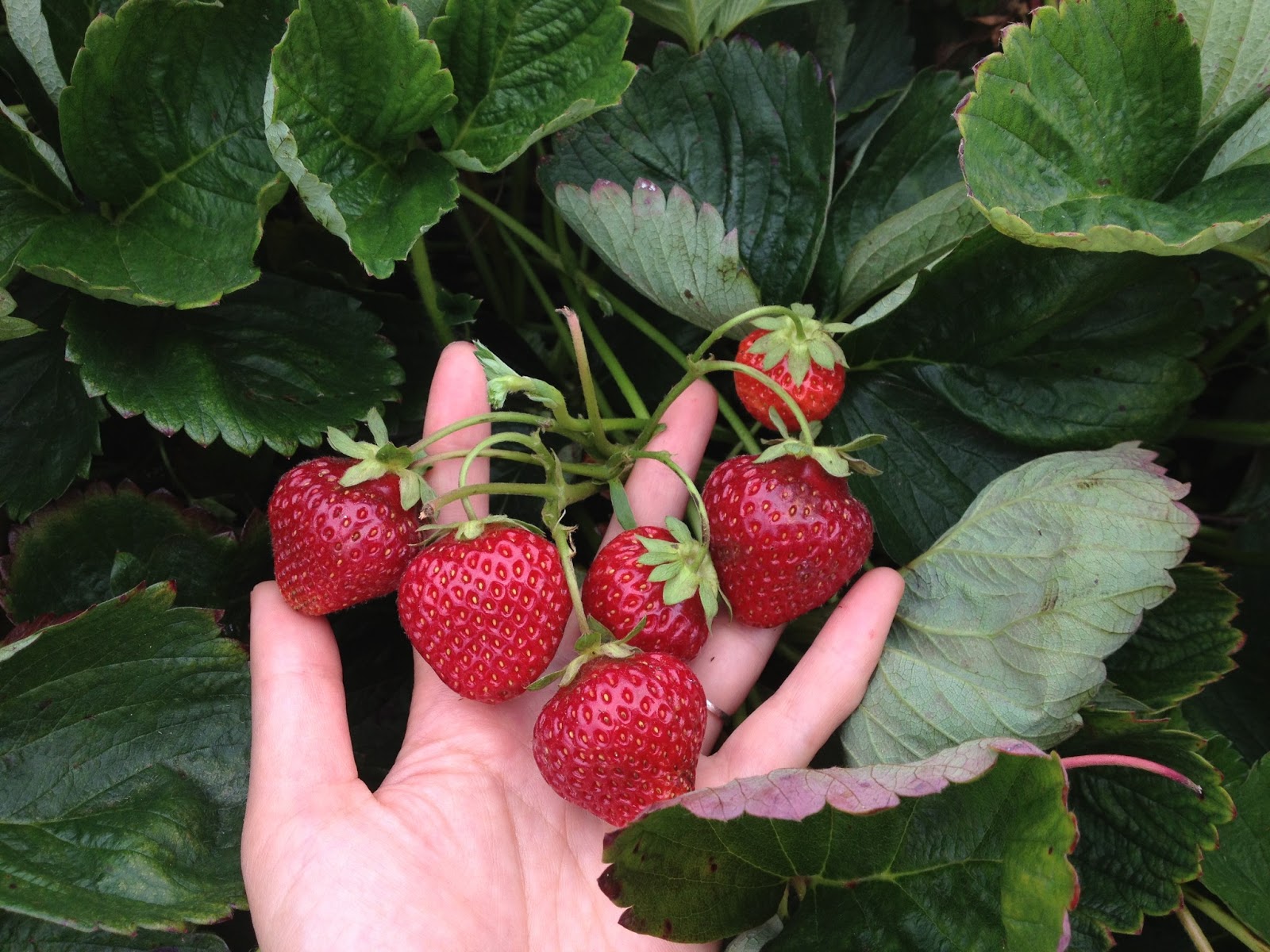
Cluster of strawberries.
We did not have high expectations, since both the commercial pickers and other members of the public would already have been through and collected the best fruit.  Sure enough, we did not see many beacons of red when we cast our eyes over the fields.

Rows of strawberry plants.
There was a quilt show on today though, complete with a sausage sizzle and tea and cakes, which gave the property a festive atmosphere.  And having to search carefully to find the berries that are buried (excuse the pun) behind the leaves gives you a greater sense of achievement when you finally walk away with full ice cream tubs.

More than 2kg strawberries.
No doubt we could have found better specimens if we had come earlier in the season, or spent longer selecting the berries, but we were still happy with our fragrant, colourful and juicy mouthfuls of summer flavour.

Farm Details

Best Berries
114 Sunnyside Road, Coatesville
(09) 415 9552

Opening hours:
Mondays to Sundays 9am - 5pm


View Nom Nom Panda in a larger map

Monday, April 9, 2012

Foodie Excursion: Pick Your Own Chestnuts @ Chestnut Traders

Rather than hunting for chocolate Easter eggs, a friend's family had the children search for feijoas instead.  Makes sense really: not only is it healthier, but you always have too many feijoas waiting to be picked up if you grow them.  This is how I remember when the feijoa season is.  Recently though, I've come to associate something else with Easter: fresh chestnuts, where you can pick your own for only about one month in the year.

I actually wanted to go to Chestnut Charlie's in Clevedon, as it is probably the closest to central Auckland.  Unfortunately, though normally open every day, they were not open today, Easter Monday.  Instead, we went to Chestnut Traders in Helensville, which, by the way, isn't so much in Helensville as in South Head, past Parakai and even further north than Shelly Beach, where we had a late lunch of fish and chips.  Their website says to allow for an hour to get there.  Given you will probably miss the turn into Nancy's Lane, which leads to the property, I would allow for more time.  Come to think of it, it is probably no closer than Chestnut Ridge, which I had rejected (even though they had cheaper chestnuts) on account of it being technically outside greater Auckland, almost as far as Huntly.  I should have noted that you would be travelling almost solely on the motorway, while there were gravel roads involved in getting to Chestnut Traders.

What Chestnut Traders has going for it, though, is that you can combine a whole raft of other activities to the chestnut picking to make for a great day out.  A tour at Crescent Dairy Goats, for instance, or a nice lunch at The Tasting Shed or the Bees Online Cafe, followed perhaps by a visit to the MacNuts orchard, or outdoor pursuits in the Woodhill Forest, such as Tree Adventures, mountain biking, paintballing or quad biking.

Even if you have nothing planned other than chestnut picking, the very distance you travel to get there, combined with the scenery, makes it feel like an adventure.  To even get Chestnut Traders, you have to find the entrance to Nancy's Lane.  Then you open (and close behind you) a gate through which you can see a path leading into the distance.  You drive down this gravel road until you get to a gate for the Pakaka farm, where Chestnut Traders lives.  The house on the left is where you will probably find your host; the shed on the right is where the chestnuts you collect will get weighed.

Gate number 1, which you will see if you have turned down Nancy's Lane.
Being the city person that I am, I had no idea that chestnuts came in a prickly husk, multiple nuts to a ball of spikes.  Fortunately, the farm had spare gloves on hand.

Chestnuts, with a spiky exterior covering.
I was also clueless enough to imagine that I would be plucking chestnuts from trees.  Although they do indeed grow on trees, they dry out and fall down by themselves.

Chestnut balls sitting on the grass, just waiting to be collected.

Growing chestnuts, still on the tree.
It is tempting to pick up the first chestnuts that you see, but the biggest, shinest chestnuts can be found under the trees right at the end.  Ask where the best pickings are to be had, and you will be amazed at the quality of the chestnuts available.  Enjoy!

Road leading to the weighing shed, with chestnuts swept into piles in the background.

Farm Details

Chestnut Traders
1716 South Head Road, Helensville/South Head (allow for at least an hour from central Auckland)
(09) 420 2750

Opening hours:
Saturdays to Sundays 10am - 5pm


View Nom Nom Panda in a larger map

Monday, March 12, 2012

Foodie Excursion: Tour & Tasting @ Crescent Dairy Goats

A month ago, I hadn't even heard of the place.  But as soon as I discovered that Crescent Dairy Goats offers a farm tour combined with a cheese tasting, all for $15 (minimum of 10 people, by appointment) and only a short drive away from central Auckland, I just had to check it out.  Reports of an impending "weather bomb"  last Saturday meant that we had to reschedule, but I was determined to enjoy it this weekend, rain or shine.  I was not disappointed.

It turns out that their award winning cheeses are produced from a herd of only 25 goats.  Run by a husband, wife and daughter team (Jan and John Walter, and Emily Ward), they won their first cheese award back in 2001, when they were at their old Albany property, mainly selling goat's milk to people who had trouble digesting cow's milk.  Less than a fortnight ago, their achievements were recognised again, with one gold, six silver and four bronze awards at the Cuisine NZ Champions of Cheese Awards 2012.

Awards and range of goat's cheeses on display.
The family (including the dog and cat) met us at the front of their house, and John gave us an introduction to their business, which began as a hobby.  They don't sell goat's milk anymore, as all of the milk goes into cheesemaking these days, and they have an impressive list of restaurant customers, including The Grove, Mudbrick, Sidart, The Tasting Shed and Huka Lodge.

We were then taken to meet the new season's kids, cute little things that greeted us enthusiastically.  Each of them had a name, and their full names are said with their family names first, like in Chinese, as in "Crescent Jude" or "Crescent Nesta".  Apparently the floppy eared goats produce creamier milk, but in smaller quantities, and the farm has a mix of breeds.

Cute kids!

After quickly walking past the stinging nettle bush by a wall (the leaves of which are used in their Farmhouse Sting cheese), we were taken to the barn and milking shed.  The adult goats were much bigger, but equally friendly, and a bunch of them walked up for cuddles.  We probably saw more of them because it was raining lightly outside, and it was really interesting being introduced to the goats, because they had such different personalities from each other.

Goats hiding out from the rain.
John showed us the milking machine, and we were even able to put a finger inside one of the suction tubes to experience what it would feel like to be milked.  Apparently, they used to milk the goats by hand after the machine was used, to get every little bit out, though they don't bother with that now.

John demonstrates the suction tubes on the milking machine.

Animal visit over, we sanitised our hands, removed our shoes, and entered the cheesemaking area.  Here, Jan the cheesemaker took over the narrative and explained the process behind their various cheeses.  We saw the vats of milk being gently pasteurised on the side (apparently it is too hard for a small scale producer to make unpasteurised cheese, as regulations mean you would need to send samples off to the lab every day), admired the homemade cheese moulds, and walked into the temperature- and humidity-controlled cellar where we both viewed and smelled the cheeses being aged.  It was amazing how much milk went into making a round of cheese.

More mature cheeses at the back.
Smaller cheeses in the cellar.

Finally, the cheese tasting!  We sampled eleven types of cheese, and they all had unique flavours, despite being made from the same basic ingredients.  Some were soft, others more mature; the blue had Roquefort culture introduced, another was washed daily in a salt solution before having an alcohol applied in the final days.  Some cheeses contained additions, such as fenugreek or stinging nettle.  Most of them didn't have any salt added.  It was a varied, insightful and delicious ending to the tour.

Cheese tasting platter.
That was not their entire repertoire either!  I bought some extra cheeses before I left, ones we did not have the opportunity to try, and there were also goat's yoghurt and goat's colostrum for sale.  You can sample their cheeses without doing the farm tour, but I would highly recommend making the trip out with friends so that you can have the full experience.

Farm Details

Crescent Dairy Goats
177A Taupaki Road, Kumeu
(09) 412 2074

Opening hours:
Mondays closed.
Tuesdays to Sundays 10am - 5pm (tours begin at 11am)


View Nom Nom Panda in a larger map
Related Posts Plugin for WordPress, Blogger...